
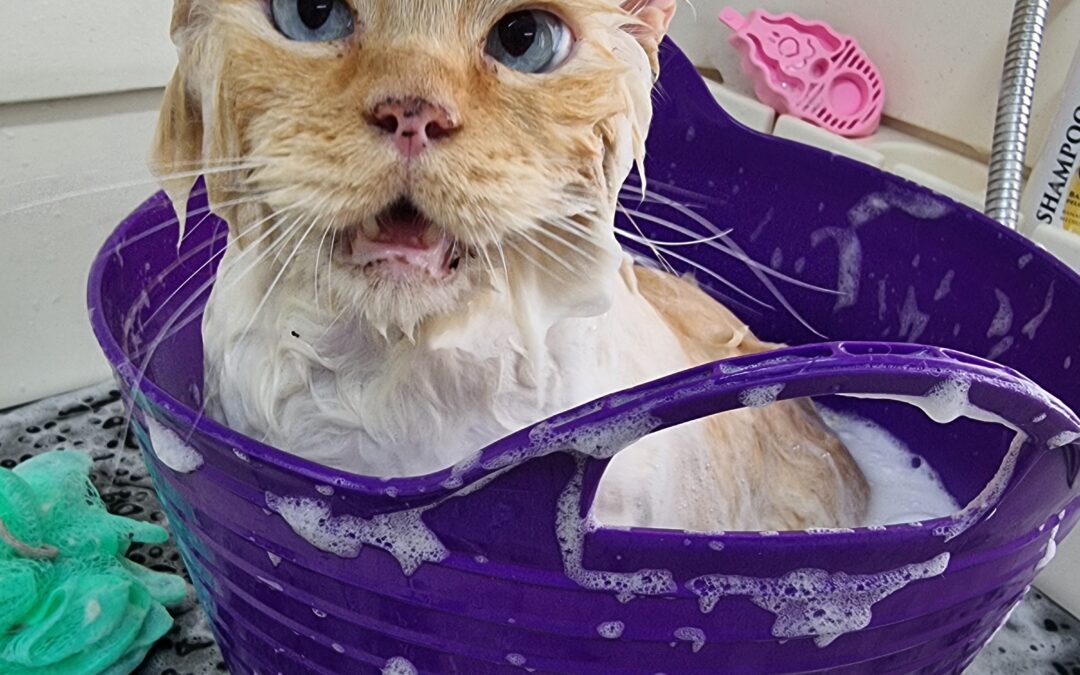
“I could never bath my cat. They’d kill me.”
I hear this from owners all the time.
Usually they’ve tried bathing their cat once at home, it went badly, and nobody has attempted it since. The cat was put straight into a sink or bath, the shower came on, the cat panicked, the owner panicked, murder mittens came out and that was the end of it.
My first thought is usually that the cat may not hate being bathed. They may have hated how that particular bath happened.
Around 99% of the cats I groom are able to have a bath in the salon. There have only been a handful that I’ve decided not to bath because of temperament, age, health or stress levels.
That doesn’t mean they all love it, just like most dogs would probably rather swerve bath time too. Most cats simply tolerate it, and they often cope far better than their owners expect.
Why do some cats panic in the bath?
Putting a cat straight into a sink full of water or switching a shower on directly over them gives them a lot to deal with at once.
There’s the noise, the water, a slippery surface and someone trying to hold onto them while they work out what’s going on.
That’s not how I start a bath in the salon.
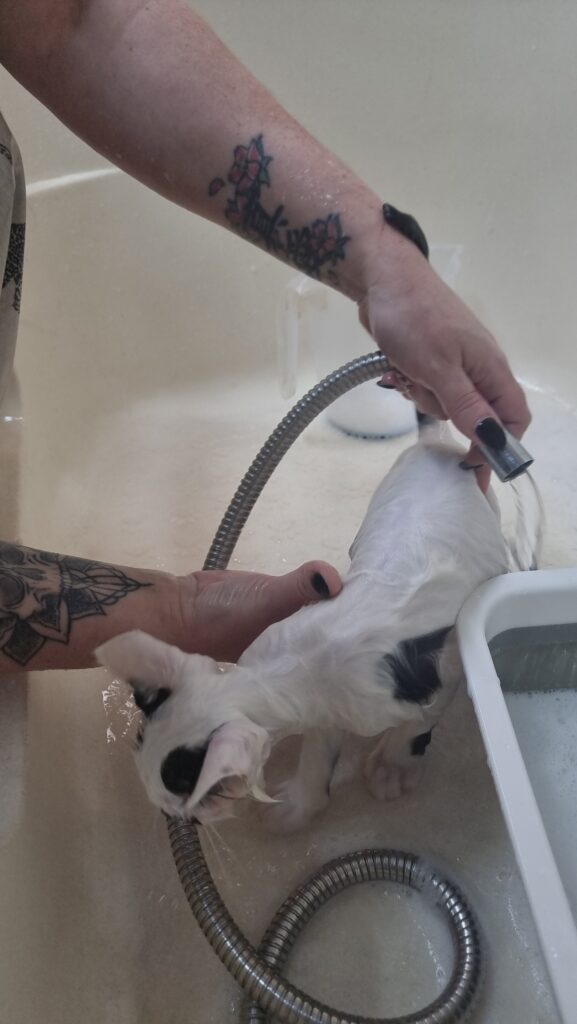
The water goes on away from the cat first. I give them a moment to settle, then slowly introduce the water at the back end of the body.
For a cat that hasn’t been bathed before, I might take the shower head off completely or start with a jug instead. The idea isn’t to soak them as quickly as possible. I want them to have a chance to work out what’s happening first.
Why a non-slip surface matters when bathing a cat
Baths and sinks get very slippery once they’re wet.
If a cat can’t get their feet underneath them properly, they’re much more likely to panic and try to get out.
A non-slip mat or towel gives them something secure to stand on and helps them feel much steadier.
Before you worry about shampoo or anything else, make sure your cat can actually stand comfortably.
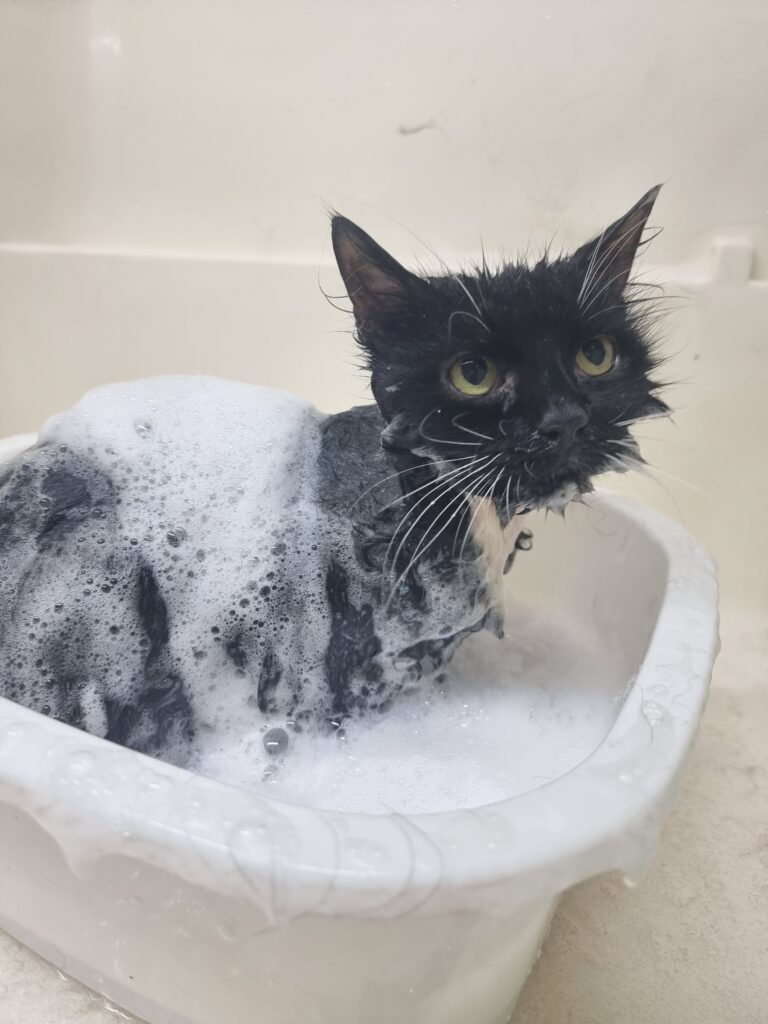
Can your nerves make bathing your cat harder?
Definitely.
If you’ve already decided your cat is going to scratch or bite you, your handling usually changes without you realising. You hesitate, grip tighter, stop and start, or get louder when they begin wriggling.
I hear plenty of stories where the cat starts struggling, the owner panics and suddenly they’re trying to hang onto a wet cat that is absolutely determined to leave.
Cats notice when the person handling them is tense.
Confident handling doesn’t mean pinning a cat down or forcing them through a bath. It’s more about being predictable and knowing what you’re doing.
I’m often told, “They’d never let me do that at home,” while I’m bathing the very same cat.
Why a cat bath shouldn’t take too long
Going slowly at the beginning doesn’t mean the whole bath should take ages.
Cats have a fairly short tolerance for things they didn’t volunteer for, so once they’re settled and coping, I get on with it.
Everything is ready before the cat goes anywhere near the bath. Shampoo, towels and anything else I’m going to need are within reach, and the door is shut before we start.
A nervous owner can easily make the whole thing much longer than it needs to be by stopping, starting, changing their grip or looking for things halfway through.
Give them a bit of time to understand what’s happening, then keep the actual bath moving.
Do cats need baths if they groom themselves?
Cats licking themselves and properly cleaning the skin and coat aren’t the same thing.
Grease, dirt, dander and loose coat can still build up, even in cats that groom themselves regularly. Some coats start to feel greasy, heavy or separated, and you often don’t realise how much loose hair is sitting in there until you start removing it.
Bathing is a big part of deshedding too. Once the coat has been properly washed, rinsed and dried, a huge amount of loose hair can come away.
Brushing absolutely has its place, but a bath and dry can release coat that brushing alone wasn’t shifting.
You can see and feel the difference afterwards. The coat feels cleaner and lighter, sits better and has much more movement.
Once owners see how much coat has come out and feel the difference afterwards, they usually understand why bathing is part of a full cat groom.
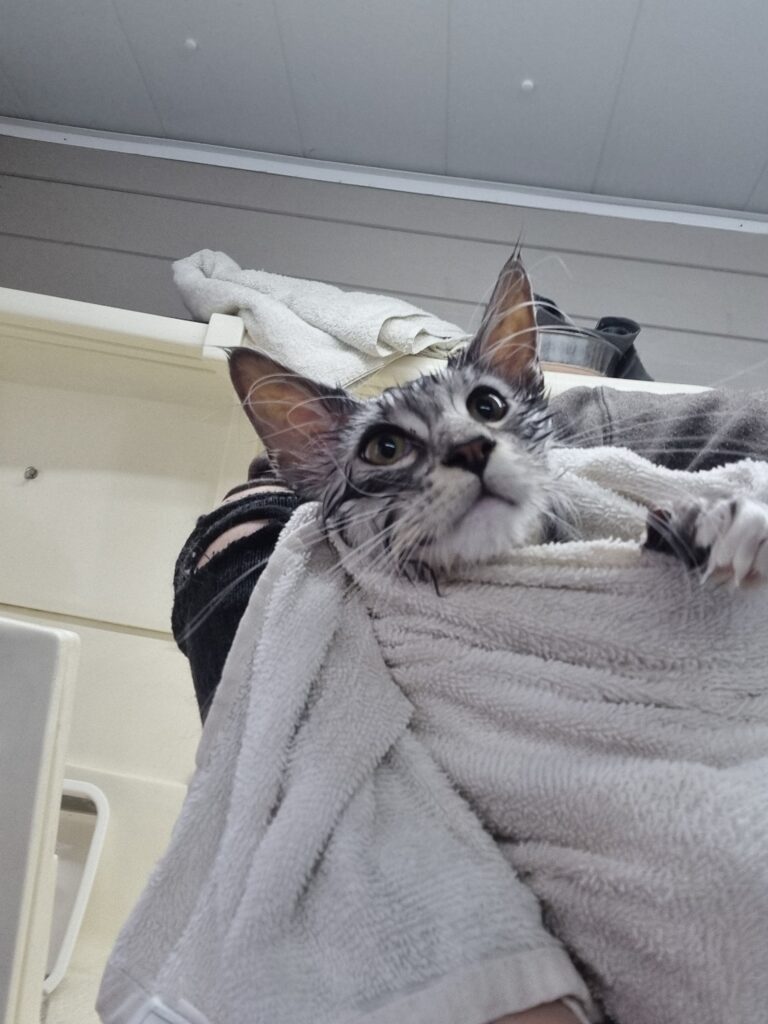
Can nervous cats be bathed?
Quite often, yes.
Being nervous doesn’t automatically mean a cat can’t have a bath.
Some need a slower introduction. Others cope better if I get on with things fairly quickly once they’ve worked out what’s happening.
There are also cats I decide not to bath. Temperament is part of that decision, but so are age, health and how stressed the cat is becoming.
An elderly cat with health problems may need a completely different groom to a young, healthy cat. Sometimes I’ll adapt the groom or leave the bath out altogether if I don’t think it’s the right thing for that cat on the day.
If your cat is elderly, unwell, has heart or breathing problems, sore or broken skin, or you’re not sure whether bathing is appropriate, get advice first rather than experimenting at home.
My cat hated their last bath. Should I try again?
I wouldn’t automatically write bathing off because one attempt went badly.
If the last experience involved putting them straight into water or turning the shower directly onto them, change the way you introduce it next time.
First, have a proper feel through the coat. Water can tighten existing knots and matting, so if you find solid mats or areas you can’t comb through, get those dealt with before bathing. If your cat already finds brushing difficult, you may find it easier to do the coat preparation on a different day.
Before you start, have everything ready and shut the door. Use a non-slip surface and keep the water lukewarm.
Turn the water on away from the cat and introduce it gradually. Taking the shower head off so the jet is less powerful, or using a jug, can make things easier for some cats.
Start towards the back of the body rather than going straight over the whole cat, and keep water away from the face, eyes and ears.
Only use products that are suitable for cats.
It’s also worth wetting the coat first and seeing how your cat is coping before you reach for the shampoo. If they’ve already had enough at that point, you can stop. Once shampoo is on the coat it needs to be rinsed out properly, so don’t start that bit unless you’re reasonably confident you can finish it.
If things are getting worse rather than better, stop. The aim isn’t to win a battle with your cat.
And have plenty of towels ready afterwards. Cats shouldn’t be left sitting around soaking wet and getting cold.
If the thought of trying again already has you nervous, there’s nothing wrong with handing the job over to somebody who regularly baths cats.
So does your cat actually hate baths?
Some cats genuinely don’t tolerate bathing well.
But one disastrous attempt at home doesn’t automatically mean your cat hates water or can never have a bath.
How the water is introduced matters. So does having secure footing, calm handling, being prepared before you start and not taking longer than necessary.
Your cat doesn’t have to enjoy having a bath. I don’t expect them to sit there thinking they’ve booked a spa day.
They just need to be able to cope with what’s happening without becoming overwhelmed.
So if your last attempt ended with claws, shouting and everyone deciding never again, it might be worth trying a different approach.
Or let a professional do it.
If you’re looking for cat grooming in Grimsby and you’re worried your cat won’t tolerate a bath, get in touch through the website and let me know what they’re like at home and whether they’ve been groomed before.
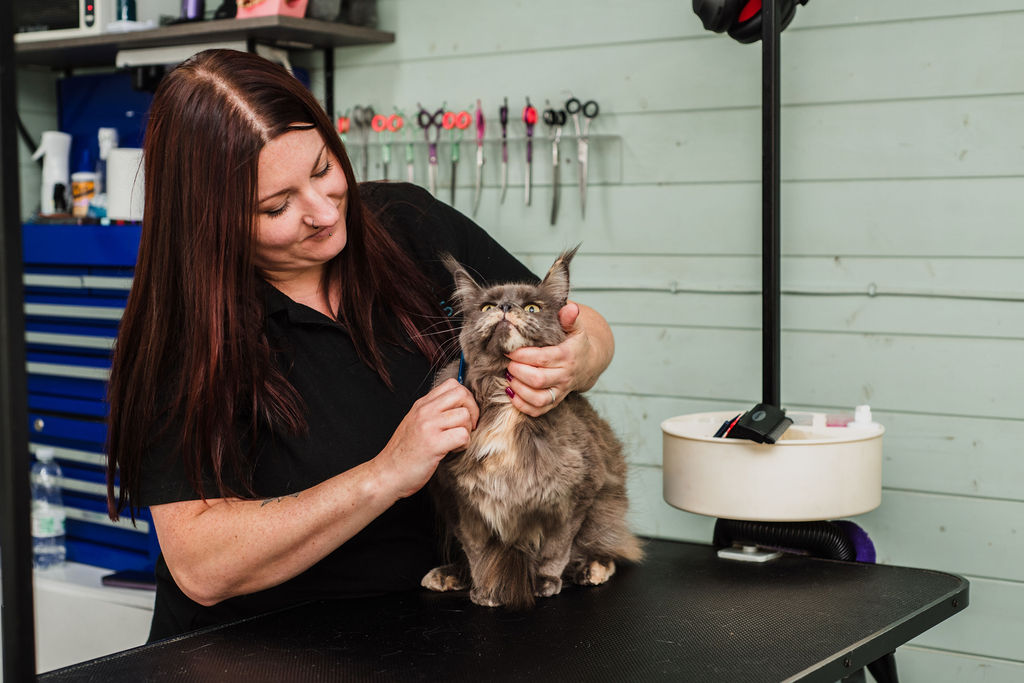
Kimberley York
Owner of Purrs and Paws
Kimberley York is an International Master Cat Groomer and owner of Purrs & Paws in Grimsby. She holds a Level 3 Diploma in Cat Grooming and Salon Management and has completed advanced cat grooming training in Singapore. She specialises in one-to-one cat grooming, including nervous and more challenging cats, with a strong focus on safe, practical and welfare-led grooming.